My Child Is Starting Kindergarten! What Do I Need to Know?!?
Thank you for entrusting your child to us as they begin their formal schooling journey! Cambridge Kindergarten is full of joyful, creative, hands-on learning that we hope will spark a lifelong love of exploration. This year will be full of “firsts,” and we are privileged to walk alongside you and your child during this special year.
DRess Code
Kindergarten dress code differs slightly from the dress code in other grades. One important difference is that Kindergarten has Outdoor Ed on Fridays! When you see school-wide communication about “chapel dress,” please know that it does not apply to your kindergartener. Instead, please see the Outdoor Ed information below for what your child should wear on Fridays.
Another change specific to Kindergarten is that boys do not need to wear belts. Elastic waist pants are allowed for Kindergarten boys. All boys K-8 must wear long pants between Thanksgiving and Spring Break.
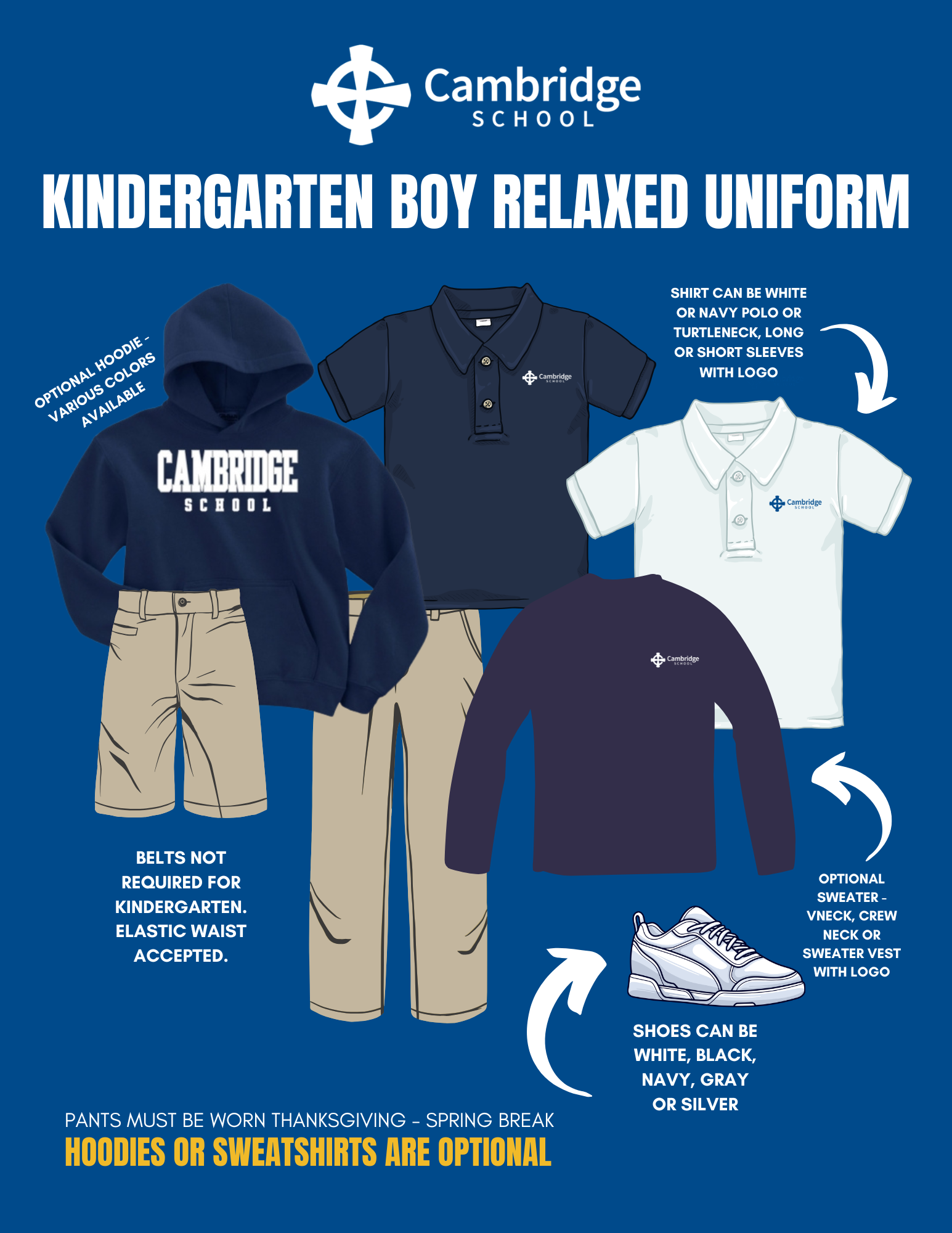
Kindergarten Boys’ Uniform

Kindergarten Girls’ Uniform

Outdoor Education Uniform
Outdoor Education
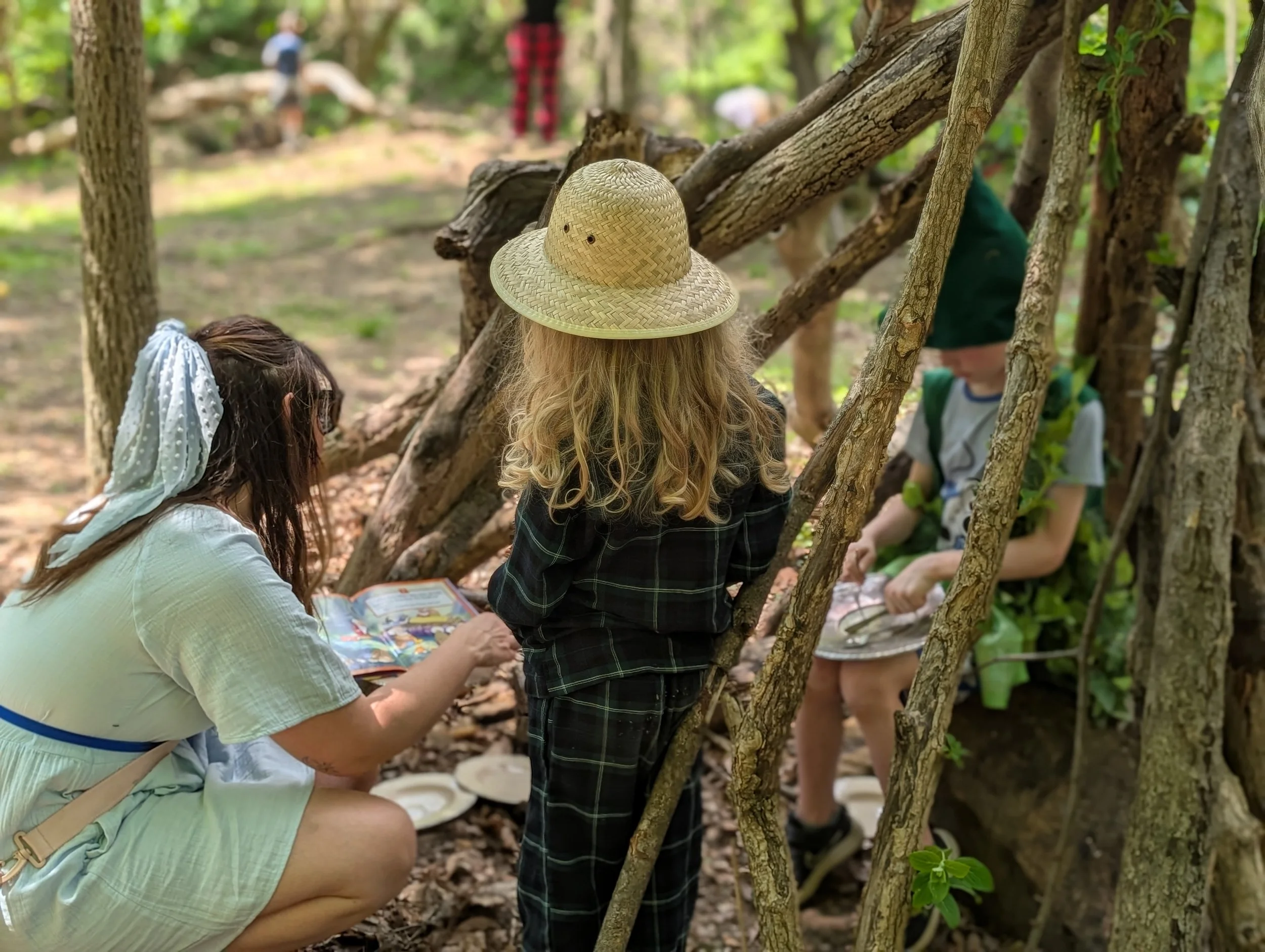
Outdoor Education is a meaningful part of our lower school curriculum. Kindergarten will enjoy Outdoor Ed on Fridays. In addition to the required Outdoor Ed shirt and shorts worn on Fridays, your child will need the following items to keep in their cubby all year.
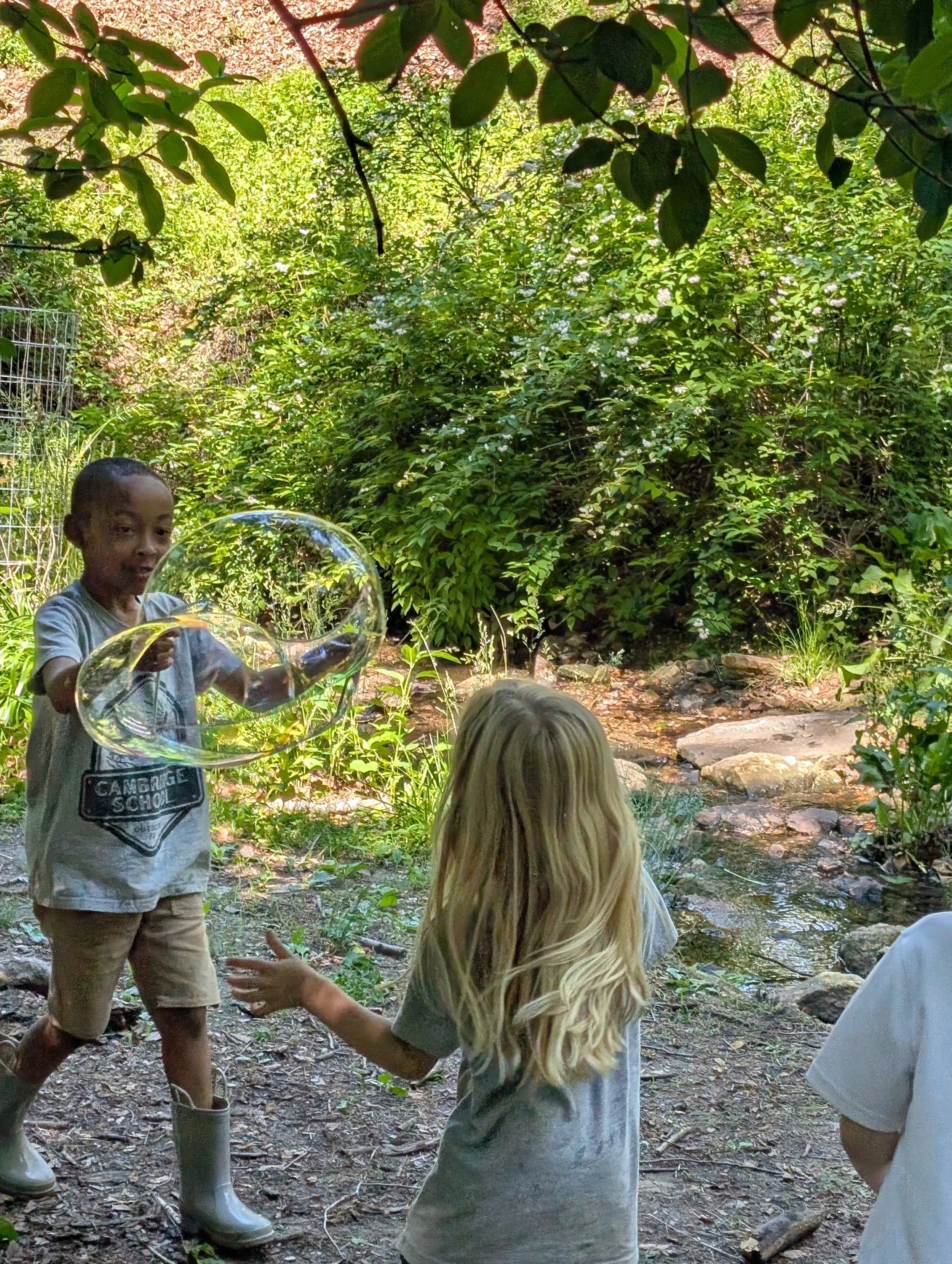
-a change of play clothes. We play in a very shallow part of the creek, but children often accidentally get some part of their clothing wet while exploring!
-seasonally appropriate waterproof shoes. Crocs are not permitted, as they become slippery when wet. Most children opt for rain boots in warmer weather and insulated boots for colder weather.
-a few pairs of extra socks for when we get wet in the creek
-a raincoat or poncho
Your. Child. Will. Get. Messy! Whole-body exploration is encouraged, so please partner with us in accepting that clothes that can get dirty or wet.
Outdoor Ed uniforms are available through Lands’ End all year, or you can place your order through Cambridge in August.
What can I do to prepare my child for Kindergarten?
1. Read Together Every Day
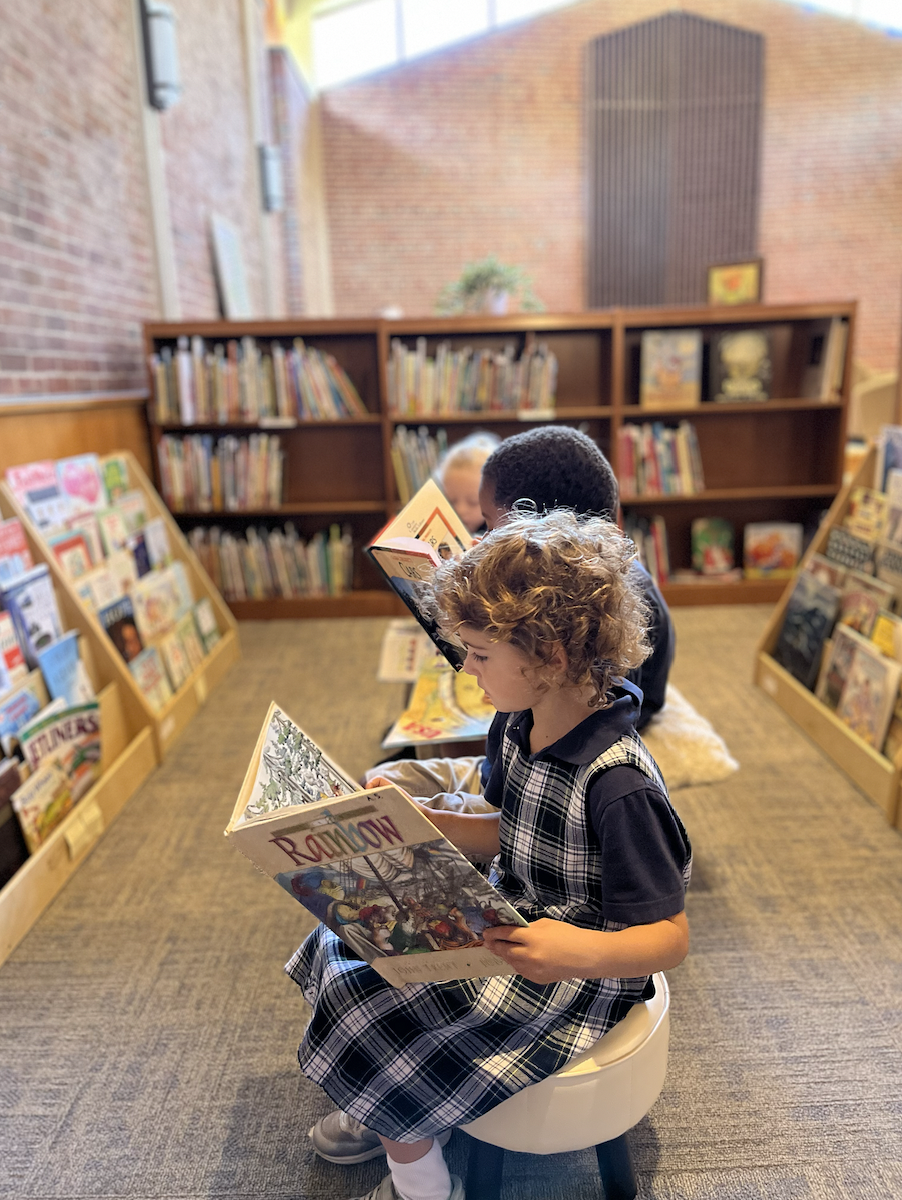
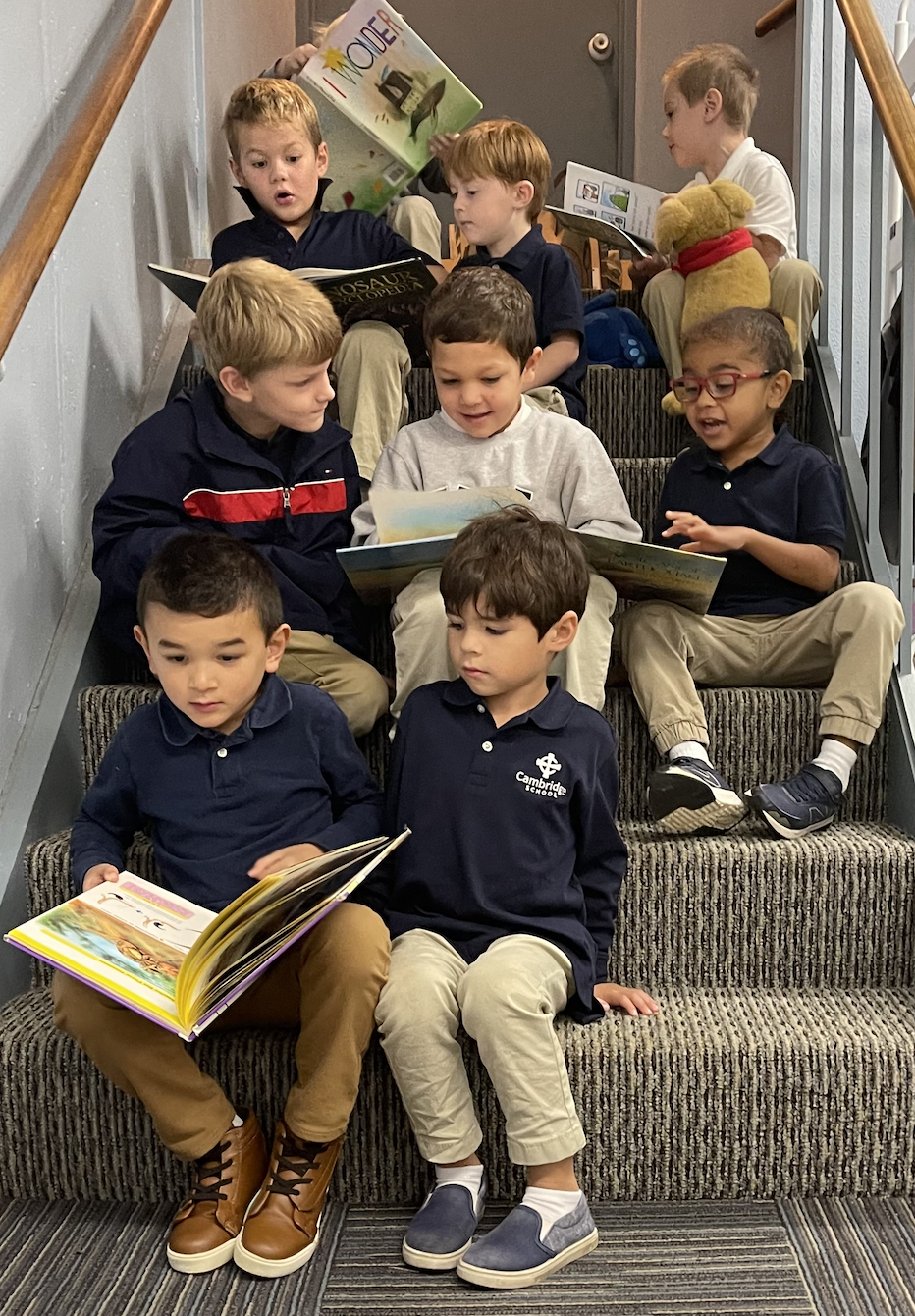
Read aloud to your child on a regular basis. Reading aloud builds comprehension and vocabulary skills, and, most importantly, gives children a positive association with text and reading. We recommend reading rich literature that is above your child’s independent reading level. This Simply Charlotte Mason article is a great resource for how to choose a great book for your child. Read-aloud Revival is a great resource with podcasts, blog posts, and book lists, and the philosophy behind reading aloud to your children.
“When we read with our kids, we step outside the noise, the hustle, the friction, and for a few minutes, we are completely and totally present with them. These moments will live on in our children's hearts even when our kids no longer live in our homes.”
The Read-Aloud Family by Sarah Mackenzie, pg 42
2. Play With Sounds and Language
Strong reading begins with strong phonemic awareness skills. Long before children learn to read, they learn to hear and play with the sounds in words. As you read together, notice rhyming words, clap syllables, and talk about beginning sounds. Play simple games like:
"What rhymes with cat?"
"What sound does ‘sun’ start with?"
"Can you think of another word that starts with /b/?"
These phonemic awareness skills are some of the strongest predictors of future reading success, and they can be practiced naturally through books, songs, nursery rhymes, and conversation.
3. Notice Letters and Numbers in Everyday Life
There is no need for flashcards or academic drills. Instead, help your child notice how letters and numbers appear and are useful in daily life. Introduce them to the idea that everything they will learn in kindergarten has a meaningful purpose that adults use every day.
From counting forks while setting the table to helping write a grocery list, there are many natural opportunities to invite your child into learning throughout the day. You might:
Look for letters on signs and buildings
Find the letters in your child's name
Count toys, snacks, or steps
Notice numbers on houses, mailboxes, and clocks
These everyday experiences help children see that reading and math are meaningful parts of life rather than just school subjects.
4. Strengthen Fine Motor Skills
Strong hands make many kindergarten activities easier, from writing and coloring to opening snacks and fastening clothing.
Try:
Playing with playdough
Coloring and drawing
Practicing a mature pencil grip
Cutting straight lines and simple shapes
Stringing beads
Using tongs or tweezers
Buttoning and zipping clothing
Remember that these skills develop gradually and improve through playful practice. There are many ways to help your child get ready to write and strengthen fine motor skills that do not require holding a pencil. The OT Toolbox has a great list of games and activities to help your child have fun while strengthening their fine motor skills.
5. Get Ready for the Outdoors
At Cambridge, we spend a great deal of time learning and exploring outside. For some children, nature feels familiar; for others, it may be a new experience. This summer, encourage your child to explore nature, make observations, and ask questions.
Just as important, help your child practice getting ready for outdoor adventures independently. Kindergarteners frequently put on and take off jackets, backpacks, shoes, and socks throughout the day. During creek exploration and other outdoor activities, children may need to change into boots, take them off afterward, and put on dry socks. Practicing these skills at home helps children feel capable and allows them to spend more time enjoying their outdoor learning experiences.
6. Practice Bathroom and Lunch Routines
Practice:
Using the bathroom independently
Washing hands thoroughly
Opening lunch containers and snacks
Opening and closing water bottles
Cleaning up after meals
7. Build Independence
Confidence often grows from competence. When children have opportunities to do things for themselves, they learn that they are capable of handling challenges and contributing to their community.
Practice:
Carrying their own belongings
Cleaning up after play
Putting away personal items
Helping with simple household tasks
8. Practice Patience, Perseverance, and Problem-Solving
Not everything goes smoothly in kindergarten. Blocks fall, crayons break, and games don't always go our way.
Give your child opportunities to:
Wait for a turn
Work through small frustrations
Try again when something is difficult
Think of solutions before asking an adult to fix the problem
These experiences build resilience and confidence.
9. Socialize and Play With Other Children
Kindergarten is a community, and many of the most important skills children learn happen while playing with others. Playdates, playground visits, family gatherings, and group activities provide opportunities to practice:
Sharing toys and materials
Taking turns
Cleaning up together
Using kind words
Including others in play
Solving small disagreements
Asking for help when needed
Children do not need perfect social skills before kindergarten, but regular opportunities to interact with peers help them feel more comfortable and confident in a classroom setting. Every child also experiences big emotions. Help your child learn simple strategies such as taking a deep breath, using words to express feelings, waiting for a turn, and asking an adult for help when they need support.
10. Most Important of All…
Kindergarten readiness is not about perfection. It is about helping your child develop confidence, curiosity, independence, observation skills, kindness, and a willingness to try!